
Precision Injection Molding Solutions for the Automotive Industry
Injection molding is the backbone of high-volume automotive part production, enabling the rapid fabrication of complex, lightweight components from engineered thermoplastics. The process involves injecting molten polymer into a precision-machined steel mold under high pressure, where it cools and solidifies into a finished part, such as a dashboard panel or bumper cover. Its primary benefits include exceptional repeatability for millions of identical parts and the ability to integrate features like ribs, bosses, and mounting points directly into the design. This method is used extensively to produce interior trims, under-hood housings, and exterior structural components that meet demanding tolerances for fit and finish.
Precision Molding for Vehicle Components
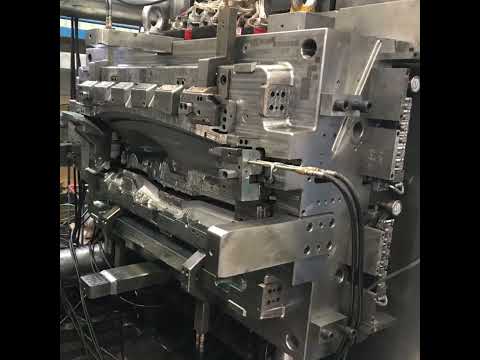
Precision molding for vehicle components in the automotive industry relies on tight tolerances to ensure parts fit perfectly into assemblies like dashboards or engine bays. You need high-cavitation molds that produce consistent, durably engineered components, often using glass-filled nylon for strength. The process manages complex geometries—think threaded inserts for sensors—without warping, thanks to advanced cooling channels in the mold. Gate placement is critical here; a poorly positioned gate can cause flow marks or weak knit lines in structural brackets. For under-the-hood parts, controlling the shrinkage rate of the polymer is vital to maintain sealing surfaces. This is about giving you reliable parts that snap together without rework, straight from the press.
High-Volume Production of Interior Trim Parts
High-volume production of interior trim parts relies on multi-cavity molds to maximize output per cycle, often producing door panels, A/B-pillar covers, and consoles. Cycle time optimization through advanced hot-runner systems and conformal cooling channels ensures consistent part density while minimizing warp. Materials like polypropylene or ABS must flow evenly across complex geometries to match gloss and texture specifications. Automatic deflashing and integrated vision inspection systems maintain quality at rates exceeding 500 parts per hour. Each mold is engineered for minimal downtime, with interchangeable inserts enabling rapid design changes without full tool rebuilds.
High-volume interior trim production balances precision molding throughput with repeatable surface finish, leveraging multi-cavity tooling and process controls to meet strict aesthetic and dimensional standards.
Lightweight Exterior Panels via Advanced Resins
Advanced resins enable lightweight exterior panel production by replacing steel with carbon-fiber-reinforced thermoplastics, which maintain impact resistance while reducing part weight by up to 50%. These materials flow into thin-wall molds designed for Class A surface finishes, eliminating secondary sanding. The injection process uses low-viscosity polyamide or PBT compounds that fill complex geometries without voids, ensuring dimensional stability under UV and thermal cycling. Cycle times remain under 60 seconds due to rapid resin crystallization, making panels like fenders and door skins viable for high-volume assembly.
- Select resins with 30–40% glass or carbon fiber loading for stiffness without brittleness
- Use mold surface temperatures of 120–140°C to achieve glossy, paint-ready surfaces
- Optimize gate placement to avoid knit lines in visible panel areas
Under-Hood Components Withstand High Heat
Under-hood components require materials that endure continuous thermal cycling and peak temperatures exceeding 150°C. Injection molding achieves this using heat-stabilized engineering polymers like PPA, PPS, and high-temperature nylon. Parts such as intake manifolds, thermostat housings, and oil pans resist dimensional warping and mechanical degradation through tailored glass-fiber reinforcement. The molding process controls flow rates and cooling channels to prevent internal stress points that could crack under thermal expansion.
- Select a polymer with a continuous service temperature exceeding 125°C.
- Design uniform wall thickness to avoid heat concentration zones.
- Validate mold temperature consistency (typically 80–140°C) to ensure crystallinity levels that resist heat aging.
Material Selection Strategies
Effective material selection strategies for automotive injection molding prioritize balancing mechanical performance against processing constraints. Material selection strategies must align part function with mold flow characteristics, such as selecting high-flow grades for thin-wall, long-fill components like door trims. Prioritize reinforced thermoplastics (e.g., 30% glass-filled nylon) for structural under-hood parts, while utilizing elastomer-modified polypropylene for interior panels requiring impact resistance. Always validate shrinkage and warpage data through mold flow analysis before finalizing a grade, as automotive tolerances demand precision. For exterior body panels, blend UV-stabilized ASA with ABS for weatherability. Avoid over-specifying; a cost-effective, unmodified polypropylene may suffice for non-visible brackets, whereas cockpit modules demand high-heat, low-VOC materials. Partner directly with resin suppliers to optimize cycle times via tailored melt-flow indices.
Engineering Thermoplastics for Structural Integrity
For structural integrity in automotive injection molding, engineering thermoplastics must balance stiffness and impact resistance. Selecting materials like PA6 or PPA requires evaluating creep resistance under sustained loads and heat deflection temperature near engine compartments. The key to managing stress concentration is fiber-reinforced modulus optimization. A logical sequence for material verification begins with:
- Finite element analysis (FEA) of the part’s load paths to identify critical zones.
- Selecting a base polymer meeting continuous-use temperature requirements.
- Adjusting glass or carbon fiber content to achieve target flexural modulus without embrittlement.
Weld-line strength from flow simulation then dictates final rib geometry to prevent failure under fatigue.
Reinforced Polymers Reduce Vehicle Weight
Injection molding with reinforced polymers directly slashes vehicle weight by replacing heavy metal components with precision-molded, high-strength composites. Strategic addition of glass or carbon fibers into the polymer matrix allows engineers to design thinner, load-bearing structures without sacrificing crash integrity or fatigue resistance. This process enables consolidation of multiple heavy steel parts into a single, lightweight molded assembly—critical for reducing unsprung mass in chassis and suspension systems. The resulting weight savings improve fuel efficiency and handling dynamics. Every gram removed through targeted molding of reinforced polymers translates to tangible performance gains without costly secondary operations like welding.
Flame-Retardant Grades for Safety-Critical Parts
For safety-critical automotive parts like battery housings and high-voltage connectors, material selection prioritizes flame-retardant grades that prevent ignition or suppress flame spread under thermal runaway. Engineers typically specify halogen-free FR compounds (e.g., PC/ABS or PA6/66) to meet UL 94 V-0 ratings while maintaining impact resistance for molded thin-wall enclosures. Glass-fiber reinforcement is often added to counteract the ductility loss from FR additives, ensuring structural integrity during crash events. Melt flow behavior must be verified at the molding temperature window, as FR fillers can significantly increase viscosity and risk flow marks in complex geometries.
| Property | Halogenated FR Grade | Halogen-Free FR Grade |
|---|---|---|
| UL 94 Rating | V-0 at 0.8 mm | V-0 at 0.8 mm |
| Impact Strength (Notched Izod) | 50–60 J/m | 40–50 J/m |
| Mold Shrinkage | 0.5–0.7% | 0.8–1.2% |
Tooling Innovations Driving Efficiency
On the factory floor, tooling innovations directly slash cycle times. Conformal cooling channels, printed via additive manufacturing into mold inserts, eliminate hot spots around complex geometries like radiator grilles or dashboards. This cuts cooling phases by forty percent, allowing an automotive molder to run a bumper mold faster without waiting for part sag. Meanwhile, rapid tool change systems swap cores and cavities for different interior trims in under three minutes, turning a press from one dashboard variant to another during a shift break. The result: a single machine produces more door panels per hour, with less scrap from warpage, because the steel stays precisely at the target temperature.
Multi-Cavity Molds Boost Cycle Times
Multi-cavity molds seriously speed up production for automotive parts. By molding several identical components—like clips or connectors—in a single shot, you directly multiply output per cycle. This slashes per-part cycle time and boosts overall efficiency. Optimized cooling channel placement within each cavity is critical to prevent warpage and maintain consistency across all parts. Balancing fill rates across cavities can be tricky, but a well-designed runner system solves this neatly. For high-volume runs, the upfront tooling cost pays off fast through drastically shorter total production timelines.

| Aspect | Single-Cavity Mold | Multi-Cavity Mold |
| Parts per cycle | 1 | 4-32+ |
| Cycle time per part | Baseline | Reduced significantly |
| Tooling complexity | Lower | Higher (requires balance) |
Hot Runner Systems Minimize Waste
Hot runner systems minimize waste in automotive injection molding by eliminating the cold runner channel, which is typically trimmed and discarded. Instead, molten resin remains heated within the manifold, flowing directly into the cavity for each cycle. This reduces material scrap rate by ensuring only the part itself is produced, often cutting regrind by 15–30% per shot. For high-volume components like air intake manifolds or sensor housings, the waste reduction directly lowers per-part material costs. Additionally, the elimination of runner recycling steps simplifies quality control, as recycled material consistency is no longer a variable.
Conformal Cooling Shortens Production Runs
Conformal cooling channels, designed to follow the part’s geometry, dramatically reduce cycle times in automotive injection molding. By eliminating hot spots, they ensure uniform heat extraction, which allows tool temperatures to stabilize faster. This directly shortens production runs because parts reach ejection temperature sooner, reducing cooling phase duration by up to 40%. For high-volume automotive components like dashboards or trim, that efficiency translates to more shots per hour from the same mold. The rapid solidification also minimizes warpage, cutting scrap and rework.
Conformal cooling shortens production runs by accelerating heat removal and enabling faster cycle times, boosting throughput without compromising part quality.
Quality Control in Part Manufacturing
In automotive injection molding, quality control hinges on real-time process monitoring. We use cavity pressure sensors to detect viscosity shifts, preventing short shots or flash before a cycle finishes. Dimensional verification with in-line laser micrometers ensures critical features like snap-fits and sealing surfaces stay within microns.
If your melt temperature drifts by 5°C, your part’s impact resistance drops below spec
, so we implement closed-loop PID control on every zone. Finally, automated vision systems scan for cosmetic defects like sink marks or weld lines before parts enter assembly, flagging rejects instantly to maintain a zero-defect target.

Dimensional Stability Through Statistical Monitoring
In automotive injection molding, dimensional stability is ensured through statistical monitoring of critical mold cavity pressures and melt temperatures during each cycle. Real-time data feeds into control charts, flagging deviations in part shrinkage or warpage before they exceed specification limits. A process capability index (Cpk) is calculated for each dimension, triggering immediate corrective actions like adjusting hold pressures or cooling times. This prevents the production of out-of-tolerance components—such as housing fits or clip geometries—by maintaining the molding process within predefined statistical control boundaries, directly reducing scrap and rework in high-volume automotive runs.
Defect Detection With Automated Vision Systems
Injection molding for automotive components demands rigorous quality assurance, where automated vision systems perform real-time defect detection on each molded part. High-resolution cameras capture surface and dimensional data, identifying flash, short shots, sink marks, or warpage immediately after ejection. These systems apply machine vision algorithms to compare live images against CAD-based tolerance models, flagging non-conforming parts for rejection before packing. For critical applications like interior trim or under-hood housings, detection occurs at cycle speed, with no operator intervention. Integration directly into the molding cell enables closed-loop feedback to the press, adjusting parameters like injection pressure or temperature to reduce defects mid-run.
Material Traceability for Compliance Standards
In automotive injection molding, material traceability for compliance standards ensures every polymer batch is laser-engraved or barcoded from receipt through final part shipment. This links each component to its specific resin lot, filler percentage, and processing parameters. Directly linking part serial numbers to incoming material certificates guarantees that interior trim or under-hood parts meet automotive flammability or mechanical property requirements without costly recalls or production stops.
How does material traceability prevent non-conforming parts from reaching assembly lines? By scanning batch codes at every manufacturing step, the system immediately flags any part tied to a suspect material lot, triggering quarantine before the part ever leaves the molding floor.
Cost Optimization Across Production
In injection molding for automotive, cost optimization across production focuses on reducing per-part expenditure through design and process adjustments. Using multi-cavity molds maximizes output per cycle, while adopting hot runner systems minimizes material waste from sprues. Efficient cooling channel design shortens cycle times, directly lowering energy and labor costs. Selecting durable P20 or H13 steel for tooling reduces maintenance frequency despite higher upfront expense. Implementing real-time process monitoring through SCADA systems prevents defect generation, saving scrapped material. Q: How does mold design reduce production costs? A: By optimizing cooling channels and cavity layout to shorten cycle times and boost output per hour. Standardizing part families for modular tooling also cuts changeover downtime, enhancing overall equipment effectiveness.
Design for Manufacturability Reduces Rejects
Design for Manufacturability (DfM) reduces rejects by preemptively addressing common defect sources in automotive injection molding. Draft angles, uniform wall thickness, and gate placement are optimized to prevent warping, sink marks, or incomplete fill before tooling is cut. By simulating melt flow and cooling, engineers eliminate problematic features like sharp corners or abrupt thickness changes that cause stress fractures or voids. This proactive refinement of geometry and material flow ensures each cycle produces a part within tight automotive tolerances, directly slashing scrap rates and rework costs without downstream adjustments.
| Aspect | DfM Contribution to Reject Reduction |
| Wall thickness | Uniform design prevents differential shrinkage |
| Draft angles | Adequate angles ensure clean ejection, avoiding warps |
| Gate location | Optimized fill paths eliminate flow lines and short shots |
Simulation Software Predicts Flow Issues
Simulation software predicts flow issues by modeling how molten polymer fills complex automotive molds, revealing air traps and weld lines before steel is cut. This preemptive analysis allows engineers to adjust gate locations or cooling channels, avoiding expensive mold rework and scrap. Predicting flow imbalance prevents short shots in large components like dashboards, directly reducing cycle time and material waste. By identifying pressure drops and shear heating hotspots, the software ensures consistent part density across high-volume production runs, eliminating costly trial-and-error adjustments.
Lean Techniques Lower Operational Expenses
In automotive injection molding, Lean waste elimination directly drives lower operational expenses. Techniques like Single-Minute Exchange of Die slash downtime between runs, reducing non-billable machine hours. Implementing Kanban systems cuts raw material overstock, freeing working capital tied up in unused resin. Standardized work protocols minimize defects by enforcing consistent process parameters, avoiding costly rework or scrapped parts. Value stream mapping identifies non-value-adding steps in production flow—such as excessive material handling or redundant inspections—allowing targeted reductions in labor and energy usage. These waste-focused adjustments shrink per-part costs without compromising quality.
Lean Techniques lower operational expenses by systematically removing waste from material flow, changeover, and defect generation in injection molding.
Trends Shaping Modern Manufacturing
In injection molding for the automotive industry, digital twin simulation now allows molders to virtually optimize fill, pack, and cool cycles for complex geometries like lightweight structural components before steel touches steel. This reduces costly trials for high-strength engineering resins. Simultaneously, in-mold sensing and adaptive process control use real-time cavity pressure and temperature data to automatically compensate for material viscosity shifts, ensuring consistent part quality across millions of cycles. For EV battery enclosures and under-hood applications, adopting gas-assist and multi-component molding enables wall-thickness reduction while integrating sealing surfaces in a single shot, directly supporting vehicle lightweighting and thermal management requirements.
Electric Vehicle Components Demand New Polymers
The shift toward electric vehicles directly compels the adoption of new injection-moldable polymers for battery housings, busbars, and thermal management systems. These materials must withstand high-voltage environments and dissipate heat without degrading, requiring specialized flame-retardant and thermally conductive grades. For instance, liquid crystal polymers now enable thinner-walled connectors that resist electrolytic corrosion. Unlike standard automotive plastics, these compounds demand precise melt-flow control to fill complex geometries around cooling channels and sensor pockets. Molds must incorporate wear-resistant tool steel to handle abrasive glass- or mineral-filled grades.
- Use PPA or PEEK compounds for high-voltage insulation.
- Select thermally conductive LCP for inverter and motor components.
- Adopt halogen-free flame-retardant alloys in battery pack enclosures.
Biodegradable Materials Gain Traction
Biodegradable materials gain traction in automotive injection molding by enabling component end-of-life compostability without sacrificing structural integrity. Manufacturers now process polylactic acid (PLA) blends and polyhydroxyalkanoates (PHA) into interior trims, ventilation grilles, and non-load-bearing brackets. Bio-based polymer formulations require adjusted cooling cycles and lower melt temperatures to prevent thermal degradation. These materials degrade reliably only under specific industrial composting conditions, not in natural environments.
- Select a biodegradable resin compatible with existing mold steel and ejection systems.
- Optimize injection speed and holding pressure to minimize shear-induced breakdown.
- Implement post-processing annealing to enhance crystallinity and dimensional stability.
The shift directly reduces reliance on petroleum-based resins in visible, low-wear interior parts.
Smart Molding With IoT Integration
Smart molding with IoT integration turns your injection molding machine into a data hub. Sensors track every cycle, sending real-time metrics on temperature, pressure, and viscosity straight to your dashboard. This lets you predict maintenance needs before a breakdown hits, keeping automotive part production steady. For a typical workflow:
- Sensors collect cavity pressure and fill time data per shot.
- Cloud analytics flag deviations from your ideal process.
- Adjustments like hold pressure tweaks are applied automatically for the next cycle.
This means consistent, high-quality interior trim and under-hood components without manual guesswork.
Supplier Partnerships and Logistics
In automotive injection molding, supplier partnerships shift from transactional to strategic, enabling just-in-time logistics that synchronize raw material shipments with your high-volume production cycles. A trusted partner pre-qualifies specialized engineering-grade resins, ensuring consistent melt flow and shrinkage for complex exterior and interior parts. Shared Kanban systems trigger automatic replenishment of bulk thermoplastics, eliminating warehousing costs while preventing line-side shortages. Dynamic routing of mold components and finished assemblies uses RFID-tracked containers, optimizing truckload consolidation to reduce carbon footprint. This tight integration allows rapid retooling for design changes, with logistics adapting to your seasonal demand spikes without interrupting sequential supply chain flow.
Just-in-Time Delivery Aligns With Assembly
Just-in-time delivery aligns with assembly by plastic injection molding automotive parts synchronizing molded component shipments directly to the automotive production line schedule. This elimination of warehousing reduces inventory carrying costs and risk of part obsolescence. A precise sequence governs this alignment: synchronized production scheduling between molder and OEM dictates mold changeovers; real-time kanban signals trigger part release; then direct-to-line truck deliveries arrive within a narrow hourly window. The molder’s press utilization must mirror the assembly line’s takt time, requiring dedicated molds and tooling buffers. Any deviation in cycle time or quality immediately halts vehicle assembly, making defect prevention and machine reliability non-negotiable for the partnership.
Custom Compounding for Unique Specifications
For unique automotive specifications, custom compounding allows precise tailoring of polymer properties beyond standard resin grades. This involves blending base polymers with specific additives, fillers, or colorants to meet exacting requirements for heat resistance, UV stability, or mechanical strength in under-hood or interior components. A particular formulation might, for example, incorporate glass fiber for rigidity and a separate impact modifier for ductility in a single pellet. Effective supplier partnerships ensure the compounder replicates this exact recipe batch after batch, eliminating variability. This eliminates the need for secondary operations or material substitutions. Bespoke material formulations become a direct solution for regulatory or performance-driven demands.
Custom compounding delivers injection moldable materials engineered to the vehicle’s specific performance, aesthetic, and durability specifications, ensuring no compromise on part function or longevity.
Global Sourcing of Raw Materials
For automotive injection molding, global sourcing of raw materials requires securing a stable supply of engineering-grade resins, such as polypropylene and ABS, from multiple geographic regions to mitigate risk. This process involves auditing suppliers for consistent polymer quality and density, which directly impacts mold shrinkage and final part tolerances. Logistics must account for climate-controlled transport to prevent moisture absorption in hygroscopic materials. Establishing long-term contracts with global compounders helps lock in material pricing and ensures batch-to-batch consistency across production cycles.
Sustainability and Regulatory Pressure
Sustainability and regulatory pressure in automotive injection molding mean you’re constantly swapping virgin plastics for recycled or bio-based resins to meet lower carbon targets, even if they flow differently in the mold. How do you handle process adjustments for these materials? You may need to tweak melt temperature, injection speed, or cooling time to avoid warping or short shots, while still passing end-of-life vehicle recycling rules. Remember, a material change under regulatory pressure isn’t just about compliance—it’s about maintaining cycle times and part strength without redesigning the entire mold.
Recycled Content Integration in Dashboards
Integrating recycled content into automotive dashboards through injection molding demands precise material handling. Post-consumer recycled polypropylene is often blended with virgin resin to maintain structural integrity under heat and UV exposure. Molders must adjust processing parameters, including melt temperature and cooling cycles, to account for variable polymer flow. A typical sequence involves:
- Mechanically separating and cleaning recycled flakes to remove contaminants
- Compounding the PCR with impact modifiers for dashboard flexural strength
- Simulating cavity fill to prevent sink marks during thin-wall molding
This approach directly reduces virgin plastic demand without compromising tactile surfaces or dimensional stability.
End-of-Life Part Recovery Programs
End-of-Life part recovery programs transform retired automotive components into reusable resin through meticulous dismantling and shredding. Molds must be designed with integral identification markers, like durable laser-etched QR codes or RF tags, to streamline sorting by polymer type. This closed-loop process demands contamination-free material; a single incompatible additive can ruin an entire batch. Recovery injectors now integrate real-time melt-flow sensors to detect degraded polymer, ensuring only viable regrind enters the mold. For high-stress under-hood parts, virgin material remains mandatory, while interior trim and housings readily accept recycled feedstock without warping.
| Recovery Method | Material Sourcing Constraint | Mold Design Requirement |
|---|---|---|
| Mechanical recycling | Post-consumer bumpers & dashboards | Runners optimized for variable-viscosity regrind |
| Chemical depolymerization | High-grade PA6 & PC/ABS blends | Hot-runner systems with anti-clog filters |
Low-VOC Processes Meet Environmental Rules
Low-VOC processes in automotive injection molding directly satisfy environmental compliance by substituting traditional solvent-heavy compounds with water-based or high-solids formulations. These methods reduce airborne emissions during production without altering part quality or cycle times. Molds are engineered with specialized venting and temperature control to handle low-VOC materials effectively. Low-VOC process integration ensures finished components meet strict interior air quality standards for vehicle cabins.
- Utilize waterborne release agents to eliminate volatile solvent evaporation from mold surfaces.
- Select resin grades pre-formulated with minimal volatile organic compound content.
- Implement closed-loop temperature regulation to prevent off-gassing during material processing.
Surface Finishing and Aesthetics
In automotive injection molding, surface finishing directly dictates how interior trim or exterior panels are perceived. Textures like leather grain or soft-touch coatings are applied in-mold or post-mold to ensure a premium feel and hide minor defects. Gloss levels are precisely controlled to match surrounding components, preventing distracting reflections in dashboards.Q: How do you avoid “orange peel” on A-surface panels? A: Tune melt temperature and mold polish to SPI grade A1 or better. Scratch-resistant clear coats are often added to high-wear areas like door handles, while matte finishes reduce glare on infotainment bezels. Every finish must withstand UV exposure and temperature swings without fading or peeling.
Textured Molds Create Premium Feel
Textured molds eliminate the cold, glossy plasticky feel often associated with automotive interiors, delivering instead a tactile warmth that signals quality. By etching precise grain patterns—like leather, soft-touch suede, or geometric carbon-fiber weaves—directly onto the tool steel, each injection cycle replicates a premium touch experience without secondary coatings. This process follows a clear sequence for consistent results:
- Photo-etching the desired texture onto the mold cavity.
- Mold polishing to refine surface energy for even resin flow.
- Controlled injection pressure to faithfully transfer every micro-ridge.
These fine details, once only possible with expensive overlays, become integral to the part, resisting wear and fading while making every touchpoint, from door handles to dash panels, feel deliberately crafted.
In-Mold Decoration Eliminates Secondary Steps
In-mold decoration (IMD) directly eliminates secondary finishing steps by integrating the decorative layer—such as a paint film or textured foil—into the mold cavity itself. As the plastic resin is injected, it bonds permanently with the film, producing a finished, scratch-resistant surface in a single shot. This process completely bypasses post-molding painting, pad printing, or laser etching, which are traditionally required for automotive interior trim, emblems, and dashboard overlays. By removing these separate handling and curing stages, IMD reduces cycle times and eliminates rejections caused by paint defects or misaligned appliqués, delivering a Class-A surface directly from the mold.
Painting Alternatives via Molded-in Color
Molded-in color eliminates secondary painting by incorporating pigment directly into the resin, yielding consistent coloration throughout the part. For automotive interiors, this avoids paint adhesion failures, VOC emissions, and costly masking. Color-compounded polypropylene and ABS are common, though achieving high-gloss Class-A finishes remains challenging. This method excels for textured surfaces like door panels, where paint would chip or fade.
Can molded-in color match metallic automotive paints? Not directly; it replicates solid hues or subtle fleck effects via masterbatch, but lacks the depth of multi-layer metallic coatings.
Coping With Market Demands
To cope with volatile market demands, automotive injection molders must prioritize rapid tooling changeover systems, reducing downtime between production runs. Adopting modular mold designs allows you to swiftly reconfigure for different part geometries without costly rebuilds. Integrating real-time process monitoring ensures consistent quality even when cycle times are compressed for urgent orders. While chasing speed, remember that a single flawed batch can derail a just-in-time supply chain far worse than a minor production delay. Investing in high-cavitation tooling for high-volume staples, paired with agile low-cavitation inserts for short-run variants, directly addresses fluctuating demand without sacrificing part integrity or lead times.
Rapid Prototyping for New Vehicle Models
Automakers leverage rapid prototyping for new vehicle models by using soft tooling and 3D-printed molds to produce functional injection-molded parts in days, not months. This allows immediate validation of snap-fits, wall thickness, and material flow under real-world conditions before committing to hard production tooling. Engineers can test multiple iterations of complex ducts, trims, and housings, refining designs based on actual molded performance. This compressed cycle lets you resolve costly moldability issues during prototype phase, ensuring a smoother, faster launch for the final production tool.
Flexible Batch Sizes for Small Production
Flexible batch sizes let you handle small production runs for niche automotive parts without retooling. By using quick-change molds and on-demand molding setups, you can produce just 50 dash trim clips or 200 sensor housings per batch. The process works like this:
- Program the press for a shorter cycle.
- Swap the mold insert in under 10 minutes.
- Run the exact quantity needed.
This stops you from sitting on excess inventory while still meeting low-volume OEM orders for repair kits or limited-run vehicle trims.
Scalable Solutions for Global OEMs
For global OEMs, modular tooling architectures enable swift production scaling across multiple vehicle platforms without retooling entire factories. These systems allow quick cavity swaps to adjust volumes per region, while standardized inserts reduce changeover time between part variants. A single mold base can accommodate different door panel geometries or bumper designs, slashing lead times for new model launches.
- Deploy multi-cavity hot runner systems to mirror production capacity across plants
- Use interchangeable core and cavity inserts to switch between left/right vehicle parts
- Integrate quick-change mold bases for rapid line reconfiguration during peak demand
How Automotive Plastic Parts Are Molded: The Core Process Behind the Scenes
From Granules to Finished Components: A Step-by-Step Look at the Cycle
Why High-Pressure Injection Matters for Vehicle Parts
Key Material Choices for Automotive Injection Molding
Engineering Thermoplastics vs. Commodity Plastics in Cars
Filled and Reinforced Polymers for Strength and Weight Reduction
